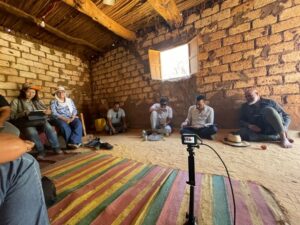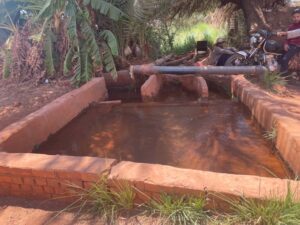
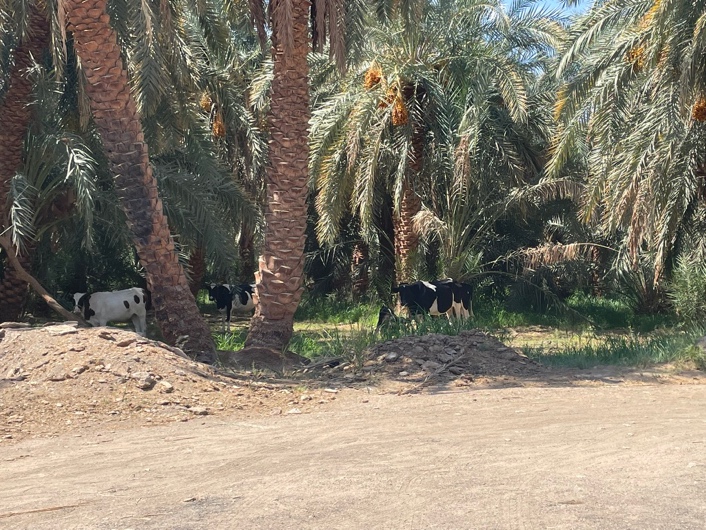
On this occasion, the perspectives of stakeholders in differing positions were obtained, including the Director of the Ministry of Agriculture in Mut, the Budkhulu village office head, and farmland‑owning farmers.
August 24, 10:00: According to Mr. Saied Madany Mahmoud, Director of the Ministry of Agriculture office in Mut, crop selection should prioritize forage plants that consume less water while supporting livestock development. It was further indicated that many leading farmers utilize shallow wells in addition to government wells. At the Ministry’s experimental farmland, training programs, cultivation guidance, and feed improvement initiatives are being implemented.
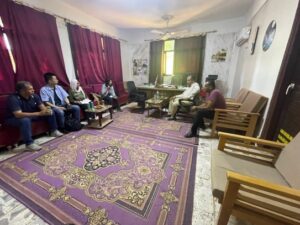
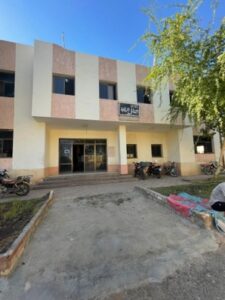
August 24, 20:00: Mr. Mohammed Sabir Ashmawy, head of the Budkhulu village office, addressed the issue of sustaining agriculture amid diminishing water resources. He noted that government wells in Budkhulu exhibit distinct characteristics: Bir 1 is primarily used for date palm cultivation; Bir 2 is centered on field crops but suffers from severe electricity shortages; Bir 2 and Bir 3 provide limited water and lack drainage lakes, resulting in many farmers leaving summer fields uncultivated. He further suggested the reuse of drainage lake water.
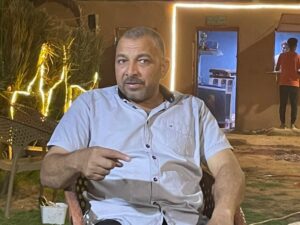
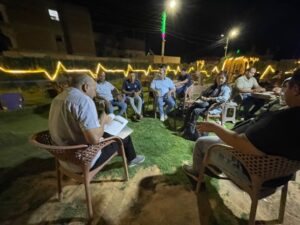
August 27, 11:00: Mr. Atef, owner of Mushia farmland, discussed the operation of farmland equipped with modern irrigation within the framework of the existing communal water supply system. The issue of management within the well‑using community was also addressed. A location was visited where water supply is provided through the intersection of government wells and shallow wells.