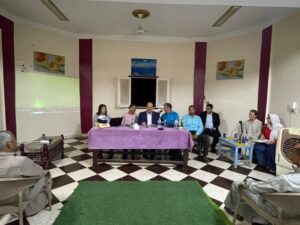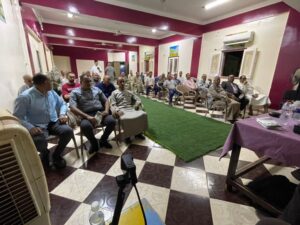
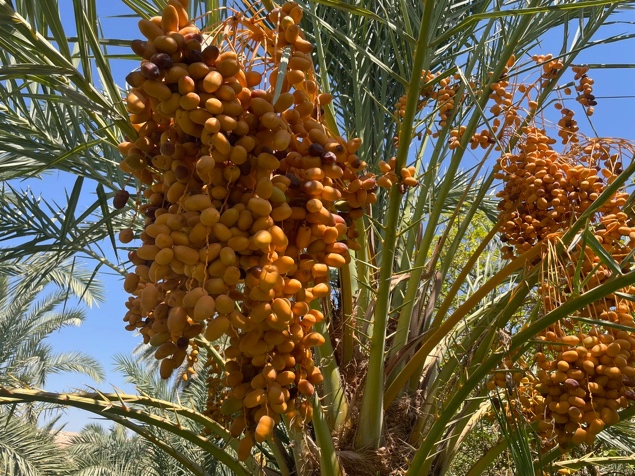
Three seminar‑style meetings targeting the public were convened at village offices: Budkhulu on Aug 25, Hendaw on Aug 26, and Mushia on Aug 26. In parallel, three focus group meetings at the well level were organized: Budkhulu Bir 1 on Aug 24, Mushia Bir 1 on Aug 25, and Rashda Bir 1 on Aug 26. Dr. Adel Shalaby presented plans for soil analysis scheduled for early September by NARSS team, which received strong endorsement from farmers. No meetings were held on Thursday, August 27, in observance of the national holiday marking the Birthday of Prophet Muhammad.
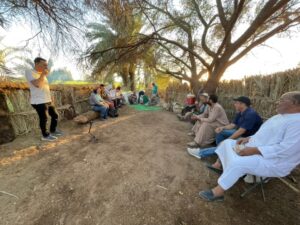
August 24, 18:00 – Bir1 in Budkhulu: At the Bir 1 user focus meeting, convened for the third time following sessions in April and May, discussions addressed the condition and history of the government well under repair in July. Although the ongoing decrease in groundwater levels was recognized, dependence on groundwater remains pronounced. Conversely, frequent well malfunctions and escalating repair costs were reported.
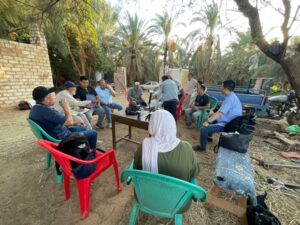
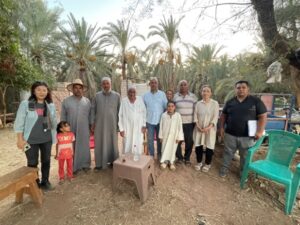
August 25, 11:00 – Bir1 in Mushia: At the Bir 1 user focus group meeting, convened for the third time after sessions in May and July, it was noted that the sprinklers on Mr. Atef’s farmland were functioning, albeit with mixed effectiveness. Reliance on shallow wells has expanded relative to government wells, which are limited by time restrictions. Interest in scientific farming practices was evident, and participants showed willingness to cooperate with the soil analysis survey planned by NARSS.
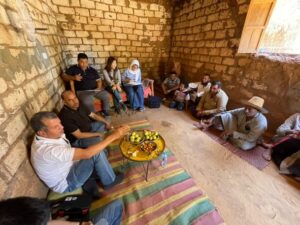
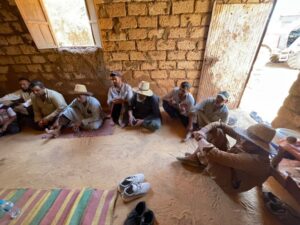
August 25, 21:00 – Local Unit (Village Office) in Budkhulu: A second seminar‑style meeting was convened after the July session. Dr. Adel Shalaby of NARSS provided input on fossil groundwater and reservoir monitoring. Considerable interest was expressed by farmers in smart soil mapping. In addition, environmental concerns were discussed, notably agricultural waste fires associated with climate warming.
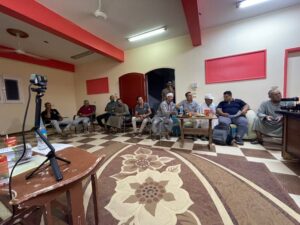
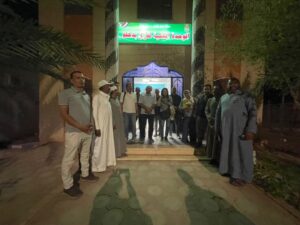
August 26, 10:00 – Local Unit (Village Office) in Hendaw: A second seminar‑style meeting was convened after the July session. Farmers highlighted the burden of high water costs and the recurrence of soil problems on an annual basis. Subsequent to the meeting, an on‑site visit was conducted to Hendaw’s Bir 2 with the village head and the Local Unit chief, where problematic sections of the irrigation canal were inspected.
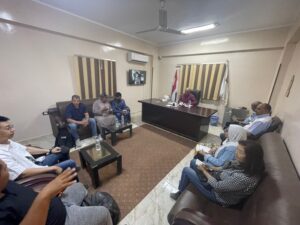
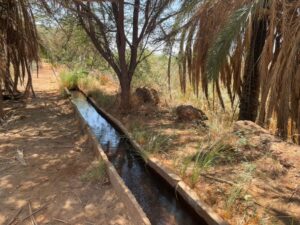
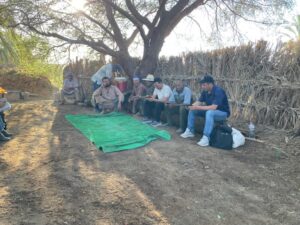
August 26, 18:00 – Bir3 in Rashuda: At the Bir 3 user focus group meeting, convened for the third time after sessions in May and July, participants recounted a case where discrepancies in operating hours between electric and solar energy sources were addressed. The issue was resolved through dialogue with the Irrigation Department and collaborative efforts by farmers.
August 26, 22:00 – Public Gathering House of Social Solidarity Ministry in Mushia: A seminar‑style meeting was convened, marking the third session after those in April and May. The opening address was delivered by Dr. Ayman Kassab, Dean of the Faculty of Agriculture, New Valley University, who urged cooperation with the university in fields such as date palm export and pesticide application. Subsequent speeches were presented by Mr. Maher, acting on behalf of the Governor, Dr. Adel Shalaby of NARSS, and Dr. Erina Iwasaki of Sophia University, after which a question‑and‑answer session was held.